
Chvrches
Who: Glaswegian trio making addictive synth-pop.
The first time my ears met the sound of the track ‘The Mother We Share’ I took an immediate interest in the curiously named Chvrches (with a V for extra quirkiness) and by the look of things I wasn’t alone. The band’s energetic mix between crashing electro synths and sweetly angelic vocals made waves in the blogosphere last year and earned them a spot in the BBC’s annual poll recognising upcoming talent. Their gothic pop has been described as “undeniably sad but also euphoric”, or as I would say, a blend of the very sugary Carly Rae Jepson and the very haunting Crystal Castles. Sound weird – but it works, as you may agree. Whilst I anticipate the release of their album later this year, releasing tracks such as the compulsively addictive ‘Lies’ means I’m holding out for great things. Take a listen below.

Disclosure
Who: Brothers who are pushing ‘post-garage’ into the public conscience.
Disclosure consists of 17 and 20 year old brothers Guy & Howard Lawrence who already have a top 20 hit under their belts, with the infectious single ‘Latch’. Their remixes of the likes of Jessie Ware have also garnered them a large following and got their name around as hotly tipped producers. Ahead of a debut album expected this spring, the duo’s EP release ‘The Face’ gives a taster of what’s to come (listen below). Their sound builds on what seems like a short history of dance music – through a 90’s garage bop, a pulsating dubstep bassline, a smooth RnB vibe, soulful vocals and an hint of house. It looks as if they could do big things on the UK dance scene.

Haim
Who: Alanis Morrisette lookalikes that are the industry critics’ new favourites.
I actually saw Haim live at the O2 when they supported Florence & The Machine’s UK tour in December, not realising at the time that I would later be writing about how the BBC have tipped them as the #1 Sound Of 2013. I must admit that I didn’t take much interest in them at the time as I was probably too busy chatting/drinking/getting excited about Florence to take any notice of the Californian three-piece. Yet after hearing their EP ‘Forever’, I am eager to hear more. The Haim sisters have often been compared to Fleetwood Mac with their Indie-Folk meets RnB fusion, while there grungy girls-on-bikes image and family pact mean they’ve been thought of as the female Hanson. As hungry critics and a growing fanbase await Haim’s full length debut, listen below to my favourite track ‘Don’t Save Me’ and be sure to YouTube search their videos to see some Destiny’s Child inspired dance routines.

Tom Odell
Who: He plays ballads on piano and may be unheard of but has already won a Brit Award.
22 year-old Tom Odell now follows in the rather large footsteps of Emeli Sande, Jessie J, Ellie Goulding and Adele in receiving the Brit Award for Critics Choice – and is the first male to do so. The classically trained songwriter first appeared in the public eye when performing on Jools Holland and has seen a growing number of supporters since including the likes of Burberry (who featured his song in their S/S 2013 show) and also Lily Allen – who claims his on stage energy reminded her of David Bowie and was so impressed she signed him to her label. Odell conveys a lot of emotion through his songs – he has been described by The Guardian as James Blake without the dubstep and he cites piano legend Elton John as a main influence. Already being called a ‘young Jeff Buckley’ and making a name for himself with ‘Another Love’ (listen below) – he is surely in for a big year ahead.

Bastille
Who: A band with a tendency to indulge in 90’s pop culture.
With Dan Smith’s grip on the vocals and instrumentals you may be fooled into thinking Bastille was a one-man act, and it was, until Smith decided to form a band to make it a four piece. Bastille’s tracks ‘Flaws’ and ‘Pompeii’ have led to a large online following as of late, just as the band are about to set off on tour with Two Door Cinema Club. I have been listening to the EP release ‘Other People’s Heartbreak’, which mixes reworked versions of 90’s classics with movie soundtrack samples to produce something that sounds nostalgic but refreshing. My favourite offering from the EP is a completely original and mellowed down ‘Rythm Of The Night’ cover (listen below). See ‘Other People’s Heartbreak Part 2’, free on Bastille’s website, for more rehashed adaptations that mix TLC with The XX, blend Donnie Darko with Frank Ocean and mash American Beauty with Florence Welch.

Hot Natured & Ali Love
Who: A collaborative project creating house music to be played in the sun rays.
I once caught Hot Natured & Ali Love’s mesmerising track ‘Benediction’ on Radio 1 and it had been hailed as last summer’s anthem across dancefloors in Ibiza. It is a slow burning dance track with uplifting vibes, deep house beats and soul-filled vocals that flow with the soothing bass line (listen below). Owners of the Hot Creations label and producers Jamie Jones & Lee Foss have teamed with Ali Love to work on an upcoming album together, expected in Spring this year. The release will have house lovers holding their breathe and will no doubt spawn several summer anthems to come.

Willy Moon
Who: The guy behind the Apple iPod ad that may be more than just a 1 hit wonder.
21 year old William ‘Moon’ is best known for his feel good smash ‘Yeah Yeah’ that you’ve most likely heard on every single soundtrack as of recent, from Apple to the BBC. The track in inescapable for a reason – it’s catchy retro rhythm, clanging drums, chanting vocals and heavy hip-hop influence make it a blast from the past but for the modern day (listen below). The New Zealand born musician channels a slick 1950’s image that matches his retro tinged sound yet he adds something fresh and contemporary to the mix, making him slightly comparable to Bruno Mars. He is currently supporting Jack White’s tour and adding the finishing touches his debut album, expected early this year.

AlunaGeorge
Who: Bedroom producer & songstress become experimental pop duo with interesting results.
Aluna Francis (vocals) and George Reid (production) are the two halves that make up AlunaGeorge. The pair’s breakout record ‘Your Drums, Your Love’ is a dreamy state of hip hop beats, computerised echoes and Aluna’s sweet child-like harping – it oozes the magical mixture that will keep audiences and critics tuned in for more when their album drops this year. In ‘You Know You Like It’ (below) the swelling and swirling RnB melody womps beneath the high pitched chimes and gentle whispers – amplifying a sound similar to synth-pop innovators Purity Ring. The stuff they are producing strikes a firm balance between mainstream appeal and alternative taste, which I would much rather see in the charts than any Flo Rida drivel. Whether they hit the big time is yet to be seen, but with heaps of media attention and a crazy collaboration with Disclosure ready to blow up dancefloors, this dynamic duo are going to make their mark somehow.
- The Blog Sound of 2013 – Winner and Top 5 (thevpme.com)
- Haim win BBC Sound of 2013 poll (guardian.co.uk)
Why today’s fragmented media landscape is forcing us to question the relevance of professional journalists..
It was the middle of the night in Abbottabad, Pakistan. I.T consultant Sohaib Athar was sat at his laptop to begin a long night of work as his family slept. But something was distracting Mr Athar. “Helicopter hovering above Abbottabad at 1AM (is a rare event)” he said to several hundred followers on his Twitter account. Little did he know he had just sent the first report of a piece of American history, the killing of the world’s most wanted terrorist.
After hearing official confirmation of Osama Bin Laden’s death, he realised that he had unwittingly live-tweeted the raid, was inundated with messages and saw his follower count jump to over 50,000.
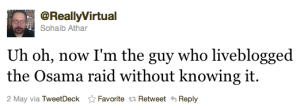
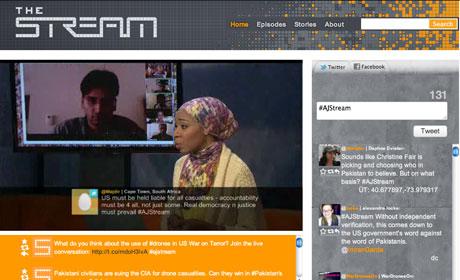
On the other side of the world in Washington DC, preparations made by producers at Al Jazeera English for the debut episode of their new show The Stream were disrupted by news of Bin Laden’s death. In a last minute schedule shake up, Mr Athar was reached via Twitter and interviewed on Skype during the live show, bringing a whole new meaning to the idea of a ‘world exclusive’.
In fact, the entire point of The Stream is to challenge the rulebook of conventional broadcasting by bringing an online community of social media users together and reporting on the unreported. Using Skype to access guests in a wide variety of locations and bring experts into the live discussions is just one of the ways the programme is demonstrating the advantages of utilizing online platforms and is “becoming a centre of excellence at Al Jazeera”, says Malika Bilal, digital producer and co-host of the show.
Placing social media at the heart of its editorial processes, The Stream brings debates to life with the #AJStream tag and also recognises the value of newcomers Google Plus and Pinterest to aggregate content. It has since received a Royal Television Society Award for its innovative news delivery and most recently a Webby Award which is to be presented to producers at a ceremony next week.
So, how are they getting it so right using these participatory tools where others are not? There’s no doubt that the open communications platforms embraced by The Stream have held a microphone up to the voices of those caught up in the Arab Spring uprisings. Capturing the brutal realities of the clashes and the raw emotions of liberated people in real-time, social media has never before played such a “pivotal role in supporting news production and diffusion”, claims academic Chei Sian Lee in her latest article.
Alongside The Stream and content sharing sites such as YouTube and Flickr, emerging social media aggregator services such as Storify and Storyful recognise the significance of user-generated content by allowing amateurs to tell the news themselves.
“It’s forcing journalists to get their content into as many places as possible and to prove their value” Global Advocate at Storyful.com, Claire Wardle told me. “Audiences can now choose what they consume”.
News organisations are becoming increasingly aware of this and attempting to keep up with fast paced and dynamic social media tools. Journalists are encouraging audiences to access them through a multitude of channels, from mobile applications and tablet devices to videos and podcasts. Providing live update bulletins on an unfolding story, such as a court case or riot break out, has also proved effective. Undeniably, one of the greatest effects social media has had on journalism is stimulating good old fashioned discussion, a virtual discourse within and between the agenda setters and the people.
Journalism professor Matt Hinckley has claimed the adoption of social media can improve not only the relations with readers, but the quality of concise reporting. “Twitter can help the reporter recognise the edge of a story and edit it to 140 characters, YouTube allows more coverage of stories that TV news often omits and Facebook provides another means for reporters to connect with newsmakers” Hinckley told OurBlook.com.
A professional journalist of today must acknowledge the possibilities of the digital sphere to source news, access witnesses and follow developments. If they are to maintain jurisdiction against the growing impact of social media, news rooms should diverge from their innate conservatism that preaches a one-way mode of communication and what Donald Matheson slates as a “rather static core set of news practices”.
“Twitter is a fantastic way of adding value to existing stories” says Jason Mills, ITV Web Development Editor. ITV News online recently adopted a live stream as part of their drastic redesign in March this year, which visibly takes inspiration from social media formats.
“Digital audiences are getting increasingly used to finding out things as they happen. From Twitter-falls to Facebook timelines, real time is an accepted way of storytelling” Mills explains. As a professional who previously worked with the BBC and Sky, Mills flags up that traditional journalists are giving recognition to a range of sources and beginning to open their gates to social media. “It allows us to curate news from different sources and offer people more than just our own journalism”.
The immediacy at which information reaches audiences, however, is yet another area where social media is hammering tradition. It has become common case for everyday people to break news stories on Twitter and create a buzz before mainstream media have had a chance to confirm reports. If Whitney Houston’s death can initiate over 2.5 million tweets in the hour that it took the Associated Press to confirm her passing, then surely the need for journalists is diminishing.
Not at all, says Mills. “We act as filters for what really is news. Sifting all the information out there to discover what the real story is” he tells me. In the event of the London riots last summer, ITV News’ twitter coverage primarily consisted of debunking rumours and fact checking. “People criticise old media for being slow. It’s necessarily being slow. It’s making sure it’s accurate” he says.
As Pew Internet & American Life Project’s 2010 report concluded, online news has largely become a shared social experience and constant mobile connectivity has turned news awareness “into an anytime, anywhere affair”. Yet our obsession with speed has accelerated the pressure to be first, often at the expense of being correct. Whether it’s tigers walking the streets of London or yet another celebrity Twitter death, social media has poisoned susceptible audiences and journalists with a dose of misinformation in many cases.
Perhaps the risk of inaccurate reports and hoaxes undermine the credibility of social media as a news source and simply reiterate the responsibilities of the journalist to guard the facts. Reuters set the trend for the BBC and Sky by introducing a strict social media policy in 2010 that prohibited their journalists to break news via Twitter, insisting staff have their posts double checked and remain suspicious of unverified online sources.
Ultimately, then, social media has irrevocably changed journalism from two key standpoints. While we expect mainstream media to get more interactive, portable and socially integrated, we also expect them to stand up amongst the sea of voices in public communication. “It adds two way interaction to journalism” says Mills, “but it doesn’t change journalistic values”.
Today, Sohaib Athar can make the news. People are able to “write the first draft of history” as digital media columnist Dan Gillmor puts it. Events such as the Arab Spring could not have been told were it not for social media platforms, yet claims of revolutionary change in news must not be overstated. Social media powers a faster distribution channel for news and adds multiple sources for fact gathering, but only a journalist can do the fact checking.
For Jason Mills, it’s just another tool to add to how journalists operate, and nothing more. “Whatever technological advances have been made and whatever is still to come, journalism in its purest form still remains the same” he insists.
During the past four months I have experienced Twitter as a fundamental communications tool in today’s online media environment, as a journalist, a blogger, a reader and a member of the local community. Initially I was surprised by the interactivity and immediacy of information diffusion across the platform, particularly with users that I did not know. My blog posts have been tweeted as ‘top stories’ numerous times and an interest in my writing has brought many new followers.


The hash tag is the site’s most resourceful feature, providing streams of searchable content and instant discussions around a certain debate, news event or place. By frequently using the tag #Bournemouth and relevant @mentions, I was able to reach many people through sharing my blog posts and having conversations with them over Twitter – as the examples below demonstrate.

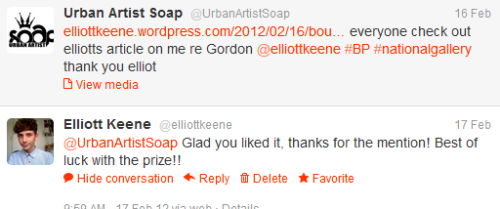

The second blog post I had written with a local angle about a portrait of ‘Gordon the Tramp’ in the National Portrait Prize showed just how powerful Twitter can be for journalists, and potentially citizen journalists too. A significant amount of ‘Retweets’ within several hours of publication and further sharing over Facebook drew large numbers of readers to my blog, as my following post detailed (https://elliottkeene.wordpress.com/2012/02/26/the-power-of-twitter/). I feel this blog post in particular is important, as I learnt how my observation that ‘everyone is a journalist’ in the digital age proved seemingly correct.
As I continued to blog, I allowed myself to be more creative with my writing, use of images and involvement with Twitter. I attempted to interact with my followers by asking them questions, using key hash tags and directly linking both my posts and online news stories (see below).


I tweeted about stories from national newspapers and other news sites frequently, often through retweeting or linking my followers to stories I came across that were of relevance to my own blog posts. Doing this brings a level of continuity and coherence with Twitter posts, in an effort to not simply post randomly but to engage with Twitter users over a topical subject.
My interaction with followers proved to be insightful as several provoked discussion over the stories I distributed (see below). For a professional journalist, this allows for a two-way communication with their audience and an effective way to source further information from the public. For a citizen journalist or blogger such as myself, it exemplifies the possibilities of online discourse with virtual communities and the potential for more collaborative forms of journalism in the future.


Finally, my proudest moment during my experience as a journalist – getting my published feature in the Bournemouth Rock over a double-page spread seen by the subject of the story and shared across Twitter!

A Mass Defiance Against Mass Media
Posted on: May 3, 2012
Last month (April 2012) the latest mobile application to embrace citizen journalism was launched in the Middle East, placing the power of news gathering and disseminating roles into the hands of those on the ground. ‘Signal‘ was inspired by the Arab Spring uprisings, and more specifically, the citizens involved in the chaos who are striving to report on the unreported.

The creator behind the application, Mark Malkoun, claims the tool allows its users to geo-tag their content to organise it by location and filters breaking stories by their importance using a voting system, giving total jurisdiction to the audience and defying mass media control – as Malkoun notes “traditional news is centralised and can be slow or biased”.
Biased, I would say, is an understatement here. Both foreign and Middle Eastern journalists suffer severe restrictions. Many are being banned from the streets, imprisoned, or in extreme cases killed – as my previous post on British reporter Marie Colvin’s tragic death exemplifies. Social media has played an essential part in breaking the news across the world – but no where else has it proved to be so fundamental to the truth and to freedom. It’s pivotal role in supporting the news production without political constraints during the Arab Spring provides alternative narratives to that presented by the heavily controlled corporate media.

Citizen journalism collective Mosireen (meaning ‘Egyptians determined’) had the most viewed worldwide non-profit channel on YouTube in January this year (see here). During the brutalities in Egypt that surround them, the group provide independent coverage of events they see as untruthfully reported by the mass media – often getting seriously injured in their attempts to do so. (See video below from Mosireen’s YouTube channel).
I recently came across the book “Tweets from Tahrir” (see here), which documents the successful uprisings in Egypt by telling the narrative of the President Mubarak demonstrations through the Twitter updates of those involved. Through the cries of both violence and liberation, Tweets from Tahrir presents a rich historical archive of the real reactions captured on the micro-blogging site as the events unfolded.

Connecting citizens during the revolution in a way that requires no professional reportage at all is testimony to a mass resistance against authority. Simon Cottle supports the current shift in power in his study by giving credit to social media platforms for “communicating, coordinating and channelling this rising tide of opposition and managing to bypass state controlled national media”. (See Cottle’s research here)
But there’s more – the media are not the only barrier to transparent reporting in the Middle East. In response to high levels of Twitter activity that inflamed the revolt, Egyptian government blocked social media sites. Many managed to bypass the restrictions using proxy servers to share their content with sites such as Flickr and YouTube, which demonstrates the sheer passion of those who were once news consumers as transformed news activists.
As internet access becomes more widely available around the world on just about any medium – tools such as ‘Signal’ are amplifying citizen’s voices in completely new ways. Consequently, mainstream media are beginning to take note…but you have to wonder whether its because they don’t want to be left completely out of the loop. It seems unlikely that the mainstream media will effectively become the outsiders, but organisations have every reason to worry as their ‘audiences’ recognise that in intense circumstances citizens are the only direct source of truth.


Today BBC chiefs warned their staff not to damage the organisation’s reputation by striking – but what dilemma do they face if they did?
As the BBC prepares for its biggest summer of live events ever seen, perhaps the organisation should really be looking after staff a little more carefully. Earlier this month broadcasting unions asked BBC staff to ballot for strike action following a “hostile” pay rise offer of just 1%. The strikes plan to directly target the Queen’s Diamond Jubilee in early June, pulling the plug on a series of high-profile events across the bank holiday weekend that celebrate the monarchy’s 60 year reign.
Unions and the staff themselves are clearly protecting their rights to a wage increase as their salaries have apparently fallen 8% behind inflation since 2007, but the BBC say their offer will not change regardless of strike action. Though it may seem fair to take a stance against the pay offer, can those behind event coverage operations justify boycotting a national event of such historic importance?

Sure, other channel providers will be covering the Diamond Jubilee extensively, but should the British Broadcasting Corporation miss out on this rare Royal celebration in what is an undoubtedly patriotic year for Britain, it would severely damage their reputation. It would be like Sky Sports not reporting on Euro 2012 football. It’s surely their responsibility to saturate our tv screens with her majesty and thousands of flag waving Britons .
The director of news at the BBC, Helen Boaden, certainly recognised that strike action would fail licence fee payers “at a national major moment”, as she urged staff not to strike during the Jubilee event. It was reported today that in an email Boaden claimed that viewers would not tolerate disruption and they would lose faith in the organisation for not serving its responsibilities to audiences.
With the Murdoch empire controlling a large part of the national press and advertisements every 10 minutes on some commercial stations, perhaps we really should support the BBC staff and recognise how valuable they are – particularly if their chief overheads are taking them for granted.
The results of the ballot are yet to be seen, as an announcement over the strike action is expected by May 21st. Though striking action at the BBC is far from anything new, these threats jeopardise the television, radio and online at the core of the UK media at a time when the entire world is watching. If the strikes disrupted coverage of the Wimbledon championships, the British Grand Prix, the British Open Golf tournament and, of course, the London Olympic Games – then it’s not just the BBC under threat but the reputation of this country. BBC bosses, please, stop being so stubborn.
- In: Journalism | Portfolio | Reviews
- Leave a Comment
How much do you trust professional journalists to tell the truth? 2011’s PBS Trust Report revealed that just 1 in 4 people (24%) thought UK media organisations were accurate in their reporting.

With the recent phone hacking scandal and the damage to News Corp‘s reputation still in the public mindset, audiences are doubting the ethical standards of journalists while the likely demise of the offline newspaper industry inches closer. The majority of the public (58%) agreed that they further lost trust in the news following the allegations of underhanded practices and the unfolding Levison enquiry, according to the PBS Report.
But the most surprising statistic of all from the findings last autumn were that 3 in 4 people (74%) agree that media outlets in the UK lie to their audiences frequently. Of course, it’s no revelation that news organisations are often driven by sensationalist reports, political bias and corporate interests. Perhaps audiences are becoming more sceptical – or depending on which way you look at it, just more aware – of ‘bad journalism’.


Sensationalism in the Daily Express: March 27th’s paper tells us of strike chaos ahead, where March 30th’s tells us to calm down.
Tabloid Watch is an excellent website highlighting the lies, mistakes, exaggerations, ethical issues and general blunders in the UK press by “blogging about bad journalism” as it says itself. Several themes on Tabloid Watch came to my attention and I was shocked at just how appalling some editorial standards appeared to be in national titles, particularly those belonging to the Daily Mail.
 The Mail’s online counterpart, MailOnline, became the single most visited news website in the world in January 2012. With an average of 45.3 million unique visitors per month, the site overtook The New York Times. Spearheaded by celebrity gossip, large visuals and headlines with shock value, the organisation has progressively become more tabloid entertainment orientated but seen enormous online audiences – perhaps by leading with what could be described as ‘share-able stories’ (such as the recent viral sensation Samantha Brick).
It may come as no surprise that as little as 1 in 10 (10%) said they trusted tabloid newspapers in YouGov‘s 2010 poll. Yet evidently, their diminishing influence as a trustworthy source does not seem to be impacting what audiences read.
As Tabloid Watch investigates, on regular notable occasions the Daily Mail misrepresents facts and does not research thoroughly enough, if at all. Just last month it ran an article claiming over two-thirds of young Muslims in Britain believe honour violence is acceptable. In fact, the study referred to shows that this amount was just 6% and the survey was on young Asians, not just Muslims. (See below for the original headline on the right & the corrected headline on the left after it was changed).


It is also common for tabloids to use a single celebrity tweet to create an entire news story, many of which are found to be fabricated and taken out of context. It seems in the online environment of accessible information, some ‘professional’ journalists are cutting corners with the fact checking and sensationalising at every opportunity they have to entice volumes of audiences for profitable gain. The 55% of audiences surveyed in the PSB Report that claimed UK media content had dumbed down in recent years would certainly agree.
On February 6th 2012 the Daily Mail Editor in Chief Paul Dacre told the Levison enquiry:
“I’m very proud of the Mail Online…it’s evolving and clearly everything can improve, but I think to come from a cold start to being the world’s number newspaper internet site is an achievement that British journalism should be proud of.”
The very idea that the Daily Mail is flying the flag for quality British journalism is enough to make every award-winning writer or investigatory journalist shudder. While I do not doubt that the organisation harbours some talented writers, it is astonishing how slack their editorial standards have become.
As nearly 1 in 5 (17%) UK adults say they will be less likely to use newspapers by the end of 2012, it seems an industry with dwindling future prospects needs to work harder to uphold public trust if it is to survive.
(For full details of the PSB Trust Report visit http://labs.yougov.co.uk/news/2011/11/14/trust-media/)
Misinformation in the Twittersphere
Posted on: April 8, 2012
- In: Journalism | Portfolio | Social Media
- 1 Comment
The power of the Retweet – would you say it’s a help or a hazard for journalism?
Using social media as a news source is becoming increasingly apparent, but increasingly dangerous too. The social nature of the web is revolutionising how stories are broken and distributed, yet all too often speed is being valued over accuracy.

Unlike traditional media, social media platforms bypass censors and can place false information into the public domain. Any regular Twitter user probably remembers the last time they saw a RIP next to a celebrity’s name as a trending topic, only to find it was a hoax.
Twitter is becoming a social media assassin – reporting on famous deaths from Nelson Mandela to Britney Spears. Those that kick start these rumours are probably just up for a bit of fun, but it can have damaging consequences.
From riots to RIP’s, a need for speed is putting facts in jeopardy.
The recent death of Whitney Houston serves as an example of just how fast breaking news can reach millions across the internet without a single confirmed news report. A whopping 2.5 million tweets related to Houston’s death were counted within an hour alone – before the Associated Press could even confirm her passing. However, Twitter’s reputation for hoaxes left many doubting any truth behind the claims of Houston’s death.
Reporting threats in inaccurate locations was rife when the London riots began to spark apparent uprisings across the UK. People throughout the country were left terrified as false rumours of rioting in their local town broke on social media. One image that surfaced on Twitter had even been digitally edited with Photoshop to depict a blaze attacking the London Eye (see below) which exemplifies such deliberate attempts to corrupt the use of Twitter as a news source.

But it’s not just audiences – journalists too are taking to the platform to distribute news, give commentary and interact with their readers. One in particular decided to experiment by purposely spreading false stories. Mike Wise, the Washington Post reporter, was suspended after taking the company’s reputation too lightly by fabricating material through a user account but he demonstrated how other bloggers and journalists will republish unproven rumours.
Journalists told to ‘be suspicious’ of all information online
These cases are a startling reminder of the weakness social media can have as a news source, at a time when media organisations are tightening the reigns on journalists as a consequence. International news corporation Reuters introduced their social media policy in 2010 to prohibit their staff from breaking news through Twitter.
The policy states that staff must get tweets double-checked and approved by managers before posting anything. The handbook for journalists working under the organisation clearly states “do not use news until you are certain of its authenticity” and to be suspicious of all information online that “is not sourced in a way that you can verify”. (The full guide can be accessed here- http://tinyurl.com/ctquehq)

Clearly Reuters is acknowledging that these platforms pose a threat to the traditional news cycle by breaking news first, but are the attempts to control social media use making their content less relevant to audiences? Are they in fact trying to maintain professional standards in an era that no longer values accuracy over immediacy?
Using Twitter for news means journalists are vital, not redundant.
Perhaps, though, the rise of misinformation on Twitter means it is increasingly vital for journalists to filter information and guard their role as the gatekeeper. “Twitter simply reiterates the essential role of journalists in sifting through the rumour mill” writes journalist Hermon Manson (http://tinyurl.com/866sv4h).
Whichever way you look at it, fabricated news is a manipulation of the social power the internet has. Twitter is uncurated as of yet and this makes it easy to pass along fiction as fact.
The Art of the Vox Pop
Posted on: April 5, 2012
 A ‘Vox Pop‘ is journalistic jargon and would probably be better understood by the everyday public as a street survey for a newspaper – an abbreviation of vox populi, latin for ‘voice of the people’.
But what are different types of Vox Pops used for? And just how important is fairness and honesty when you amplify the public voice?
The main purpose of the vox pop is to test public reaction to news (like a new law) or an event (such as the Olympics). Stimulating public debate, recognising concerns or forecasting results are the most common reasons – but of course, the word on the street can be as light hearted as the reporter wishes.
On a local level, questions asked could pick up on an issue in the community or perhaps highlight opinions on a new building, campaign or scheme being introduced. It might be as little as one word or as much as several paragraphs – but hearing what people like us think is often the most engaging part of a story.


Vox Pop’s will often dissect controversial talking points that everyone is likely to take an opinion on, meaning the more opposed that people you interview are, the better. I went out onto the streets of Winton to try it out myself for a story I was writing in the Bournemouth Rock newspaper, after my editor asked me to create something for their lead feature (not just your regular news story). Since the piece highlighted the infamous Gordon The Tramp as a representative of Bournemouth, I figured that the best thing to do was reach out to the community who may have interesting viewpoints or had experiences with the story’s subject…
Sue Matthews, 38, Moordown ResidentHolly Bidwell, 21, Bournemouth Student“I’m Gordon’s friend on Facebook and I’m completely behind the campaign for him to be an Olympic Torch bearer for Bournemouth. He’s not actually a tramp which many people find interesting. He might not conform to what we expect, but he’s a sweet enough guy and a landmark for the town. I’ve grown up in the area and I have seen him around all my life, he always seems to look the same!”


“I think he is a local legend. He is a big supporter of Bournemouth FC team so he must know his sports, I think he would be a good representative for Bournemouth”.
“He needs to get a job frankly! Gordon isn’t worthy of the honour of bearing the torch for Bournemouth, he makes no contribution to society! There are many others that are far more deserving, such as the unsung heroes that do work for charity because they want to. As former Vice President of Bournemouth Chamber of Trade and Commerce, I was quite aware of what Gordon had been up to and what other people thought about him”.

 Harriet Elsom, 22, Bournemouth Student
“I once saw Gordon in town after a night out and he was standing by the taxi rank chatting to the drivers and passers by. I asked him what the time was because I’d heard about his talent. He’s a really friendly guy!”
It was no easy task – I found so many people were reluctant to stop and chat and even when they did they refused to have their photo taken! Mr Sheppard’s opinions are quite strong and not only make for an effective contrast with the others but make an argument against the ‘legendary’ local personality. Initially I (somewhat naively) considered not placing his comments into the article because they may come across as fairly offensive to certain audiences, but then I came to realise that’s the entire point of a Vox Pop – not to anger people of course, but to document real views from real individuals that may challenge the Status Quo (another brilliant Latin word).
The first of two semi-final heats of the Dorset Music Awards will take place tomorrow evening at Kyps club in Poole. The remaining five acts still contending for the prize will battle it out in front of a panel of industry judges.
After tough competition seen at the quarter final rounds at The Winchester in Bournemouth earlier this month, the final five acts are fighting for a place in the final, which will be held at Bournemouth’s O2 Academy venue for the first time.
T he Dorset Music Awards was started in 2006 as an annual competition that would act as a platform for developing the local music scene. The event seeks to act as a bridge for musicians between Bournemouth and the outside music industry, whilst staging several community orientated live events.
“The DMAs are designed to be a community project that acts as a platform for pushing the local scene forward giving valuable lessons, various benefits and a social focus that gives opportunities to local acts, enabling them to see beyond the fringe of Bournemouth and Dorset for their gigs and musical careers” said Trevor Acorn, DMA’s events organiser.
The semi finalists include local bands from a range of musical backgrounds, consisting of The General Public, Paint It Blue, Peace, Love & Gloves, Yellowgroove and Know One.
Tom McDally, lead singer of Paint It Blue, said “Crowd support and interaction is everything so get along and support your favourite”.
The bands at this stage are already familiar to the judges so now it’s up to them to prove that they can perform under pressure and that they have an audience that will support them.
Tickets are available online at £5 each.

After 4 weeks of sourcing news stories from a local patch in Bournemouth, I learnt just how hard journalists have to work to get something fresh, interesting, and most of all, newsworthy. Following my experience of both failings and successes, here are my 3 crucial tips on how to report local community stories:
1. RESEARCH
This first stage is the most important of all – it means you save a great deal of time wandering around the streets and probing shopkeepers (which I did a lot of initially). If you have an idea of what events are on and what issues are relevant in the community then you often have a big head-start.
Social Media – The hashtag and search functions available on Twitter are incredibly useful for seeing what people are saying about an area by the minute. Similarly, Facebook can be a tool for finding connections like community groups, company fan pages and posts by local residents.
Several stories that I came across on my search, such as the Twin Bridge opening in Poole, stimulated a great deal of public discussion online and gave me ideas for angles to take. Another example was the funding of cookery classes at a nursery by Westbourne Rotary Club, which I found out about by coming across the club’s Facebook group.
Newspapers – An obvious one, but if you find a story in the local paper that hasn’t covered all angles you may be on to something. Both local and national newspapers are good to research around because they highlight relevant topics and events that may affect the residents in your patch. I even found copies of The Advertiser useful for postings about what’s happening in the Bournemouth area – so it’s not all junk mail – I learnt to look beneath the surface!
Local council & community noticeboards – Look out for planning permission signs found on noticeboards, they could hold a big story behind them and provoke angry or positive responses. Another is local council boards and websites, which often have a great deal about important events going on that could lead you in the right direction to a story.
After looking on Bournemouth council’s website and twitter feed, I came across a rather useful list of local libraries that were running activities for children on World Book Day – which ended up giving me contacts & a story to follow up.
2. PERSIST
After trawling up and down the high street on my first week, I realised that stories don’t just appear out of thin air. If it’s really newsworthy then the chances are it’s buried and you have to find it. As a last resort, whilst verging on close to giving up all together, I walked into an art gallery thinking that the chances were slim – but how glad I am that I did!
The gallery owner introduced me to his latest entry, which was being showcased in Westbourne before entering the National Portrait Prize. From there, I contacted the artist and other representatives of the gallery to produce a story that made it into the Bournemouth Rock newspaper the following week & got quite a few hits online (as my recent post tells of). One thing this showed me was to continually persist to search, even if it means looking in places you never would have considered.
It is also important to chase stories that you believe have potential – many people you come into contact with may not be willing to help or may not give you the answers you need – but a great quote could be right around the corner! When I wrote up my story on local World Book Day events, I tried several times to contact the event director Kirsten Grant – which was an unsuccessful feat because, admittedly, she had World Book Day to organise and run across the UK that week. But after contacting various people and nagging them, I was given a personal email address and she answered my questions on the evening before the big day – I was very impressed!
3. CONTACT
If, like me, you are reporting on an area repeatedly, then making good contacts is key to your success. Getting familiar with the important members of the community can prove beneficial to your news sourcing.

Mel Smith’s shop in Westbourne
I spoke to a friendly florist owner Mel Smith on the first week, and it turns out she was the President of Westbourne Traders who knew a great deal about the concerns of the community.
Since getting in contact with Ms Smith twice on the phone in the weeks following our initial meeting, she led me to a news story. Her knowledge about the increasing traffic problems that were affecting local trade were invaluable, because she is a very connected member in the local community of businesses. My repeated efforts to contact Ms Smith brought me a great local news scoop and a reliable source to quote.
WRITE IT UP…
So there’s my pieces of advice for a budding reporter in 3 main steps. Once you pluck up the confidence to approach people, organise your main leads and commit to being a relentless journalist, you’re sure to produce something newsworthy. Then comes the task of mastering the concise ways of writing it up professionally!
-

-
The following story was created using Storify. For the original post, please see here : http://storify.com/elliottkeene/marie-colvin-mourning-the-death-of-a-brave-martyr
Marie Colvin, war correspondent for The Sunday Times and Remi Ochlik, a French photojournalist, were killed on Wednesday morning (22/02) as bomb shells were dropped above the safe-house where they were staying in Homs, Syria. It is believed that Colvin and Ochlik were fleeing the press centre when hit with a rocket-propelled grenade. -
Marie Colvin, U.S. Journalist, Killed in Syria – The Daily Beast
 2 days ago … Witnesses said Colvin and Ochlik were killed by a rocket-propelled grenade as they tried to exit a house used by foreign…
 -
Journalists in Syria and around the world expressed their shock at the deaths & tributes poured in via Twitter.
-
“RIP 2 our colleagues killed in #homs, the price we pay 2 shed light on atrocities, the price #syria pays everyday 4 freedom
-
“Marie #Colvin’s last report was shocking,her voice on #ITN yesterday gripping.She was friend to many of us and is a huge loss to everyone.
-
“I end this day in anger, that Marie Colvin has died, that very few of us can do her kind of journalism & also for what journalism has become
-
The Price of Truth
News of the tragedy came just a day after Syrian citizen journalist Rami al-Sayed was also killed in Homs. The city has been at the centre of fierce bombardments over the past weeks, as the Syrian army seek out to kill journalists telling the truth, under President Bashar al-Assad’s order to silence the news of civilian killings.
-
 Dear journalists, If you try to do your job is #Syria u risk your life by Assad & his gangs! where else does it happen? http://pic.twitter.com/eCHZpQTz
 -
“Syrian army reportedly pledged to “kill any journalist who set foot on Syrian soil” to stop reports of civilians deaths tgr.ph/xdHqOK


It was claimed that army officers were intercepted by intelligence staff as they discussed a plot for the journalists’ deaths, including that of Colvin. The officers were planning to claim that the journalists had been attacked by terrorist groups. These alleged reports are exposing the very nature of the authoritative forces with their efforts to control the media and destroy lives.
-
-
“Ironic that journalist who warns of indiscriminate shelling of civilians is killed by shelling of a media centre. irishtimes.com/newspaper/b…


Dedicated
Colvin was said to be dedicated to her job, to sourcing the truth and to human rights. Only hours before she died, she was an interviewed guest on Anderson Cooper’s show about seeing a child die amidst the violent conflict. Anderson had told Colvin to ‘try to be safe’ just a short while before being killed.
-
“Marie Colvin’s last broadcast, hours before she died, was about the painful death of a child during the Siege of Homs. bit.ly/AjZlqr
-
“RT @LaurenGerber: @andersoncooper telling Marie Colvin to ‘try to be safe’ hours before her death was definition of eerie. Powerful read: nymag.com/daily/intel/2012…
-
“RIP Marie Colvin, a brilliant, dedicated, and fearless journalist who died while covering horrific bloodshed of innocent civilians in Syria.


Tributes paid to Marie Colvin. itvnews Wed, Feb 22 2012 17:39:24
-
-
“Marie Colvin – R.I.P.
She had lost her left eye when she was shot the by Sri Lankan army, on purpose when they heard she was a journalist. Exactly the same happened in Syria, where unfortunately she was killed. We need more Marie Colvins in our fight against Terrorist governments.
The Power of Twitter
Posted on: February 26, 2012
- In: Journalism | Portfolio | Social Media
- 1 Comment
How the ultimate media platform took me by surprise.

Some may say the influence of the ‘Twitterverse’ is exaggerated, over-hyped and glamorised. I agree; it’s endorsement by every brand and celebrity figure under the sun is perhaps a little overbearing – especially for those who haven’t caught onto it.
As a journalist, though, the platform is the ultimate connectivity tool for the twenty first century. 140 characters with interwoven tags and mentions can be empowering for everyone with access, allowing us to become more connected with the growing possibilities of ‘web 2.0‘ that surround us.
It is hardly a revolutionary statement to say that Twitter (alongside Facebook, YouTube, Flickr, Instagram, LinkedIn, etc.) has changed the nature of journalism forever. Professionals and rising amateurs can provide up-to-the-second information on the latest happenings and trends around the globe. Now our days, personal interviews and contact information can be accessed in just a moment over the web.
Journalists are finding sources, the right people and valuable material through their connected Twitter feeds and lists. Furthermore, news can spread at speed never seen before. You simply can’t come across anything online without seeing a share, comment or rate button – it seems the interactive dynamics of the internet are beginning to be used to their advantage.
After my personal experience of this, I decided to use my own work as an example of just how powerful Twitter can be…

This is my original tweet on the afternoon of February 16th. After publishing a story I sourced and wrote up onto my blog about a local artist, I tweeted about it with the tags #Bournemouth and #Westbourne to make the information searchable to anyone looking up the areas. Secondly, I directly @ mentioned a Bournemouth news twitter account and the artist himself, the Twitter username ‘urbanartistsoap’. Well, this was just me being a good journalism student. I had not prepared for what came next.
The post was retweeted 6 times in just a few hours by the artist, friends and a few unknown people. The interesting thing is, these unknown people, and those who follow them, all ended up following me because of one tweet. (See below).


As my story began to spread across Twitter, it also appeared on other social networks like Facebook and community-based blog sites (see below). The integration of Twitter on Facebook amplifies posts across the two sites, reaching wider audiences simultaneously.


By this point I was surprised at just how suddenly the story rapidly spread and the amount of online readers that were interested in the piece. The artist himself was very pleased with it and urged his many followers to follow me, before offering me some work experience – yes, in a tweet! Whilst this opportunity came out of the blue, none of it would have happened had I not tweeted my article with the right @mentions and #hashtags to get it out there.
My blog statistics the following day showed that it boosted my page views significantly too..

Surely this demonstrates the incredible capabilities of Twitter, as an information distributor with a whole lot of clout. It is no wonder that journalists are reconsidering their traditional roles and newsrooms are changing how they disseminate their news.
Engaging with where the audience are based rather than waiting for them to come to the news is the fundamental change of practice here. Journalists are now fighting not only a declining newspaper readership, but the diverse and social means of aggregating news content online too.
For the article in reference, see my previous post below.
A local urban artist known as ‘Soap’ has high hopes for winning the National Portrait Gallery‘s BP Prize with his latest unique portrait.
The prized piece depicts the face of Bournemouth legend Gordon Roberts, better known as Gordon ‘the tramp’ or ‘the timelord’, who is renowned in the area for his remarkable ability to tell the time correctly without wearing a watch.

Metropolis Artworks in Westbourne have invited members of the public to their gallery to see the portrait before it enters the national competition next month.
‘Soap’, otherwise known as Adam Klodzinski, has been represented by the gallery for two years. Originally from Poland, the 30 year old works from his studio in Pokesdown, Boscombe, where he practices freehand airbrushing.
Soap recently won local’s admiration with his graffiti-inspired piece commissioned by National Rail at Pokesdown train station. The freehand artist has previously crafted portraits of urban idols Rihanna, Professor Green and Amy Winehouse amongst others, garnering himself a large online following. Dizzee Rascal has even professed himself a fan and the rapper honoured Soap’s work by setting his portrait as his Twitter image. “Music has always played a massive part” says Soap, who names hip-hop culture as an inspiration.
His most recent masterpiece, however, depicts a famous face a little closer to home. Despite not being homeless, Gordon the tramp has become famed for wondering the town’s streets and sporting his trademark white beard and football scarf. “Gordon is so well known around here and people admire him” explains Soap. “I’ve taken Professor Green for a kebab and got less attention than Gordon does in Bournemouth town centre!” he laughs.

The local hero has made national headlines several times for his internet stardom and popularity in Bournemouth, whilst last year thousands of supporters even joined a campaign for the 78-year old to carry the Olympic Torch for London 2012. Gordon’s latest venture takes him into the world of art, through Soap’s incredibly lifelike paintings.
“When an urban artist, better known for his street work, immortalises him it forces a whole new generation to question how they see the elderly and the vulnerable in our community” says Metropolis Artworks owner, Vicki Angus.
Each year the gallery selects one of their artists’ pieces to be submitted to the prestigious award, alongside thousands of other hopefuls. Metropolis are backing this year’s entry with great confidence. “We wish him every success” Vicki added.
‘The Timelord of Bournemouth’ is expected to showcase at the gallery until March 10th, when a celebratory night hopes to invite members of the public to meet Soap and of course, Gordon himself.
Check out the video below & others on Soap’s YouTube channel to see his work being made through the stages…
Everyone is a Journalist
Posted on: January 27, 2012
When was the last time you uploaded words or images instantly viewable to hundreds of others online? In a world that is increasingly photographed, filmed, reported and blogged about, today’s communication tools have the power to influence like never before.
Whilst television and radio media have incorporated audience’s views and contributions through various interactive platforms, it is the internet that truly embraces the participatory space. Indeed it could be argued that traditional Journalism is loosing it’s relevance in a fragmented media environment, but surely the changing practices and growth of social media only enhance the role of the professionals, to set the news agenda and filter the vast number of tweets, videos and images into what counts as newsworthy.

For my 10,000 word dissertation I am studying these comparisons between established news gathering/distributing techniques and the role of citizen journalists in breaking news events. As a current topic, it is something that changes rapidly and will continue to shape the future of our news. The debate of the professional vs. the amateur is ongoing, but the values of trust, accuracy and fairness remain. Alongside my research, I am studying a News & Journalism unit in the final term of my degree – to explore elements of news & feature writing, patch reporting and online engagement.
In the first of these sessions, my tutor asked us inquisitively; why Journalism?
There will always be a part of me that wants to write as if I am a journalist. I was 15 when I first set foot in a Newsroom, where I spent a week sat at a desk with a Windows 95 computer typing up what I thought were incredibly interesting local news stories. Looking back, I did learn a lot, but perhaps not quite what I had anticipated. I am simply far too much of a perfectionist to crack out hard news pieces, to commit to a deadline and answer to an editor. I just like to write.
In the coming weeks I will be put to the challenge, gathering stories from local communities and producing news content fit for publication, but I am eager to try my hand at it once more. My outlook six years on is a different one – everyone can be a journalist, in theory. Equipt with mobile technology and socially connected platforms, citizen-produced content can spread fast.

The image above has become renowned by citizen journalist commentators, which was snapped on an iphone and tweeted by onlooker Janis Krum following the US Airways aircraft crash into the River Hudson. Now, I am no Janis Krum, and I certainly don’t expect a plane to fall from the sky and land in Bournemouth any time soon, but there is no denying we live in an age of undermining traditional media. I have the potential, much like everyone with the right tools, to establish myself as a citizen journalist. Whether known as grassroots reporting, user-generated-content or participatory news, whichever way you phrase it – the balance in power really is shifting towards the people.

- In: Music
- Leave a Comment
Can the technology that killed the industry revive it?
Connecting with fans has always been at the heart of gaining support for musicians, but in a world of tweets, tags, blogs and apps – never before has interactivity been so vital. In today’s music industry it seems utilizing online mediums is the key to pushing artists out there, particularly when creating a public buzz around new promotional releases.
It’s no secret that the music industry has been struggling to survive in the internet age of piracy and file sharing. With a drop of £189m in UK music revenues last year, pressure is on for record labels to find new ways of engaging with the online market.

Earlier this year EMI formed an agreement with music gaming corporation MXP4, to produce interactive Facebook games that will feature tracks from the recording giant’s major artists – such as David Guetta. EMI’s announcement is one of many developments for the dwindling music industry that enables artists to connect with their fans across various media platforms in creative and inventive ways. Social gaming is proving to be the marketing boost that music never had before the digital age, but can the technology that killed the industry revive it?
Super Fans
Take for example the launch of ‘GagaVille’, a collaboration between game designers Zynga and a publicity hungry Lady Gaga, where fans were able to access un-released songs from the singers upcoming album release. Similarly, pop-rock band Maroon 5 have rewarded fans through partnering with ‘GetGlue’, an entertainment social network. GetGlue offers a unique mobile app for winning branded content in return for user ratings and recommendations, which essentially engages with fans to promote Maroon 5’s tour and album.

Another cross-promotional campaign example of music gaming is the popular ‘Revenge’ series, an application available on the iPhone. The Katy Perry addition, sponsored by Bing and created by Disney, has exceeded a staggering 4 million downloads. It’s clear that these applications have been designed to serve as a toolkit for the ultimate fan, by providing a game, new music, tweets, tour dates and lyrics, so that users are immersed in content that brings them closer to artist and other fans alike.
Most recently, creati ve agency Archibald Ingall Stretton pioneered the multimedia campaign ‘Save the 1Day’, an innovative online experience for fans of One Direction. ‘1D’, as they are known by an abundance of teenage girl admirers, are Simon Cowell’s X-Factor protégé boyband tipped to storm the charts with their debut album release this November. On behalf of the music mogel’s record label Syco, AIS have produced an exciting transmedia campaign that operates across social networks to connect with 1D’s young and devoted fan base.
The ‘Save the 1Day’ initiative, which launched last week, challenges fans to complete tasks and work together so they can win first-looks at the band’s new album content. The concept behind the story involves cracking clues to retrieve the exclusive production content stolen by a ‘super-fan’ called 1D Cyberpunk. The character interacts over Twitter drawing supporters together and encouraging them to drive tweet trends, which ultimately builds a strong online presence to make communicating with fans much more achievable.
Ground-breaking
Some integrated campaigns are even winning the praise and top honours from marketing experts, as seen by Droga5’s ‘Jay-Z Decoded’ book launch effort, when it won the Grand Prix Outdoor category at this year’s Cannes Lions International Festival. The successful promotion for search engine Bing and US rapper Jay-Z is simply inspiring in its use of new media experimentation and just how gaming can market music with today’s tech capabilities.

Incorporating mobile and GPS, New York agency Droga5 conceived the idea of a location-based scavenger hunt for clues to find pages from the rappers autobiography, which were artistically printed onto canvases in real hidden locations such as restaurants, pool tables, jacket linings and billboards. The coded game captured fans attention on a worldwide scale, engaging them with both the upcoming product and Jay Z’s life story.
Whether making a splash in the publishing or music industry, it seems companies are discovering ground-breaking ways of promoting artists using online and mobile campaigns that bring the fun into the hands of who really matters – the fans. Such multifaceted promotions such as ‘Decoded’ and ‘Save the 1Day’ are unlocking not only rewarding content but a possible future revenue model for artists.

That’s The Festival Spirit
Posted on: November 14, 2011
This piece was written during my recent PR internship at Pumpkin, on behalf of creative agency Archibald Ingall Stretton to highlight their involvement with Coppafeel’s successful breast cancer awareness campaign..

Music festivals have become an essential part of the great British summer and are growing in numbers, with now over 450 nationwide. Whether a jovial gathering on the local green or a world renowned event; a cause to crack out the wellies or an occasion for a Pimms jug; music and the arts have been bringing people together in fields across the country for generations.
Criticism is brewing surrounding the commercialisation of some events, with claims that V, Reading, Glastonbury and the like have become too predictable and aimed at middle-of-the-road ticket holders. It is true to say that we live in an age where festival outfits are planned months before via heat magazine, and entry fees for a weekend at the larger events are reaching the £200 mark. The days when Glastonbury charged a mere pound to see T-Rex headline are very much over.
If the real spirit of these national and local shindigs are losing their meaning amongst the money-making sponsorship deals and overpriced beer, then the presence of charity work and voluntary aid gig-goers may be starting to readdress the balance. Charities such as Oxfam and Greenpeace have played a big part in providing events with rallies of site stewards in return for free tickets, whilst rectifying an essence of generosity and community support.
Various aid-based organisations have got involved with the increasingly packed festival calendar, such as Coppafeel! and its ongoing campaign to raise breast-cancer awareness among young people. Earlier this year the organisation began its festival tour at Beach Break Live in Wales, attracting the student-only crowd to their ‘Boob Tent’. The Hello Boobs project, created by Archibald Ingall Stretton, has been successful in drawing attention to the importance of checking breasts for prevention of late detection or misdiagnosed cancer, with the added help of celebrities Fearne Cotton and Lorraine Kelly.

The agency created a memorable pastiche of Wonderbra’s 1994 ad ‘Hello Boys’ that aimed to encourage young people to ‘name their breasts’ by pitching up at festivals with postcards, transfer tattoos, and a seaside style face cut-out of the infamous billboard advert.
The fun and quirky awareness campaign is an example of the many ways in which charities are targeting the public at festivals with their message – going some way to ensure these gatherings are a little more altruistic and a little less materialistic.
Introducing Wolfette
Posted on: November 13, 2011
- In: Music
- Leave a Comment
Hailed by Popjustice as their ‘new favourite popstar’, Wolfette is delivering catchy electro-rock in the form of her latest single ‘Different Story’, and may be worth keeping on the new talent radar.

Much like her debut release ‘Waiting for the Explosion’, Wolfette’s sound on the new track blends guitar riffs, dirty basslines and strong vocals, while still sounding like a perfectly shiny pop record from the 90’s era.
Both visually and sonically she resounds a younger Sharleen Spitari, with a sprinkle of Alison Goldfrapp magic. When it comes to comparisons, think smouldering front-women from Garbage and the Yeah Yeah Yeah’s (clearly main influences) combined with the edge of Blondie or Ladyhawke. Have a listen yourself to make your own judgement and check out her new video below:
Whilst nothing groundbreaking, the video serves as a perfect introduction to Wolfette, seeing her frozen in time and messing her hair up in the wind.
The singer claims she is excited about her first video – ahead of her untitled debut album expected sometime soon – “It’s going to be a visual treat and something I’ve never done before.”
In Profile: Colin Firth
Posted on: May 5, 2011
- In: Art & Culture | Portfolio | Reviews
- Leave a Comment

From grumpy toff to stuttering monarch, Colin Firth may be at the Oscar-winning height of his 30 year career, but it was no overnight success. Ahead of the DVD release of his latest epic The King’s Speech, I take a glimpse at the real Mr Darcy’s tale…
Born in 1960 to two academic lecturers, a young Colin Firth moved from Hampshire to Nigeria at just two weeks old, where he spent several of his early years. “There was an immense cultural diversity under my roof throughout my entire upbringing” Firth says. Having also lived in St Louis, USA before moving back to the UK at 11, the quintessential Englishman had a surprisingly multicultural childhood.
Neither did he have a particularly privileged start – forget the Justin Beiber’s and child stars of today – Firth started out collecting rubbish in his first job as a dustman. In fact, nothing about his life on the road to fame echoes qualities of the upper-class gentlemen that his typecast character has become so renowned for. Studying at London’s Drama Centre Firth tells of how he “tended to get flamboyant characters, paranoids and psychos. Since then, I’ve been astonished to find myself playing naive, sensitive, romantic young chaps.” After going on to appear in huge theatre productions such as Valmont in 1989, he branched out to Hollywood cinema with a string of films – including Wings of Fame and Femme Fatale in 1991, neither of which were remarkably successful.

As a major international success the BBC adaptation of Jane Austen’s Pride and Prejudice propelled Firth to new heights, playing heartthrob character Mr Fitzwilliam Darcy. The television series gained the young actor sex icon status with one of Rom-Com’s most iconic scenes that still remains resonant in minds today – yes, the wet shirt.
The following year in 1996, Despite Firth’s personal life complications with the separation from co-star Meg Tilly in 1994, his career grew from one blockbuster to another, with the release of Shakespeare in Love, the Bridget Jones Diary series, Love Actually and more recently Mamma Mia.

However his role in multi-award winning film A Single Man, directed by fashion designer Tom Ford, was described as “a quantum leap for Colin Firth”. Firth took on the role of a grieving gay college professor which earned him an Academy Award nomination and gained triumphant film festival attention, whilst Firth used his increasing fame to speak out about the challenges facing gay actors who risk losing roles if they come out. “I think it needs to be addressed. I think we should all be allowed to play whoever — but I think there are still some invisible boundaries which are still un-crossable.”
In 2007 the actor exclaimed how grateful he was to receive an honorary degree from the University of Winchester, before his profile reached royalty status earlier this year with the phenomenal success of The Kings Speech.
His portrayal of the stammering George VI was a powerful performance that put him in line for Oscar glory earlier this year, whilst also winning big at the BAFTAs and Golden Globes. At such a pinnacle point of one’s career, it seems Firth has been able to break away from his romanticist hero typecast set by the commercial success of Bridget Jones, to reveal a more raw, genuine and of course, brilliantly English, talent.

There is no denying Firth has now reached a point that all actors dream about, but he stays rooted in reality, accepting his Oscar saying “I have a feeling my career just peaked,” before dedicating it to his mother Shirley, wife Livia and “all the people who have been rooting back home”. His increased star power is bound to change his future career, most likely using it to aid his charity work and campaigning which he has shown  commitment to for many years, but in the movie stakes it seems he is opting for smaller art-house movies in between his big accomplishments. Firth plays more of a cameo role in his next project the John Le Care thriller Tinker Tailor Soldier Spy out this Autumn.– but in the mean time you can enjoy the epic that is The Kings Speech on DVD, available from 9th May.
The King’s Speech – available at Play.com
Your Ultimate Gig in 200 Words
Posted on: April 14, 2011
- In: Journalism | Music | Portfolio | Reviews
- 1 Comment

A recent MTV competition that I entered offered one aspiring director, reporter or photographer a money-can’t-buy opportunity to showcase their talents. It gave creative music lovers the chance to live out their ambition at their ‘Brand New for 2011’ live events at KoKo in London, which I won tickets to. Having been instructed to write a 200 word summary of my ultimate gig experience, my entry is as follows;
 For one night only, MTV has brought the finest of British acts making waves in the industry to the heart of Camden’s bustling community at the Electric Ballroom. Fusing dedicated fans and fanatics of new music with the most exciting talent of the moment, the vibe is euphoric inside as the crowd anticipate hearing the faint plucks of the harp. As Florence Welch is lowered from a sparkling trapeze above their heads, dressed in a silk gown, harmoniously whispering the opening line to Cosmic Love – Camden know they’re in for a treat tonight.
Celebrating some of the hottest names on the UK scene, the exclusive venue plays host to 2010’s beloved home-grown acts – such as the delicate chimes of The XX, the country twangs of Mumford and Sons and the catchy synth-pop o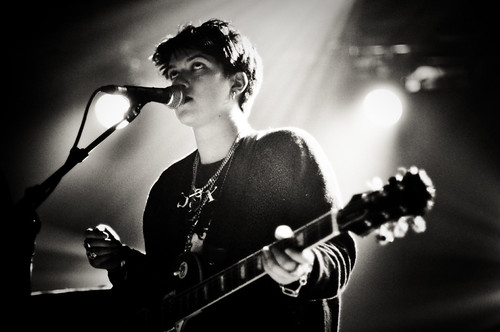 f Critics Choice sweetheart Ellie Goulding. At the forefront of 2011’s upcoming British talents, hotly-tipped songstress Jessie J wows the crowd with her fierce mash-up of quick witted R’n’B and sharp attitude prompting fists in the air. Tinie Tempah is joined on stage by partner in crime Labrinth, who smash it on their track Pass Out sending all gig-goers into raptures. This closes an unforgettable evening with the certainty that UK talent is at the top of its game right now, and doesn’t fall short of putting on a show of worldwide standards.
A month in music: February
Posted on: February 24, 2011
- In: Music | Reviews
- Leave a Comment

Melbourne based two-piece ‘Gypsy and The Cat’ released their first album back in November of last year, but caught my attention when their infectious track ‘The Piper’s Song’ was featured as iTunes Single of the Week earlier this month. Having recently moved to London to complete the album ‘Gilgamesh’, the Aussie duo are sure to be more widely recognised come festival season with their uplifting summer-soundtrack debut.

'Gilgamesh'
‘Gilgamesh’ is packed with well-crafted catchy pop songs, a polished production of airy synth electronica with a 70’s BeeGee-like falsetto at times. As a well rounded album, it delves between a light indie sound in ‘Running Romeo’ and dazzling pop in tracks like ‘Time To Wander’ – echoing a style noticeably similar to fellow Australian band ‘Empire of the Sun’.
Personal favourite ‘Jona Vark’ (listen below) brings the recognisable high-pitched vocals and gentle guitar instrumentals to produce a serene melodic quality. For much of the album, pairing a drum-kit percussion with smooth synths – whilst delivering a chorus that shines – ensures an easy but enjoyable listen. Perfect for a laid back afternoon, Gypsy and The Cat ride alongside Temper Trap and Passion Pit in their dreamy country-electro blend, just without being too in your face.
 Adele Adkins needs little introduction, as one of the finest in British talent today – the Londoner has seen international success across the US since the release of her debut ’19’ in 2008.
Three years on and Adele delivers a kind of follow-up that is a rare gift today – since her rival contemporaries Duffy or Kate Nash failed to make much of an impact with their second releases – but Adele’s ’21’ is unavoidably a huge success in many ways.
Having been the first to receive the Brit’s Critics Choice Award, Adele stands up to her critical acclaim with that powerful voice and impeccable song writing talent. Since the release of ‘Rolling in The Deep‘, the first single from ’21’, the online buzz surrounding the album has been almost overbearing and amplified to death – most notably with YouTube viewers going potty for a clip of her performance on Jools Holland (currently with over 9m views). Although some might say she is over-exposed in this sense, ’21’ is very much worth the hype.

'21'
In comparison to her debut ’19’, the album tells of a deeper heartbreak and gives an element of both her personal maturity and artistic growth. With just a voice and piano, ‘Someone Like You’ is simply stunning and easily the most emotional ballad of the lot, whilst ‘Rumour Has It’ rattles with classic rock-n-roll soul, and much like ‘I’ll Be Waiting’ has a hint of jazz blues to provide a little more of an uplifter.
With such a rich selection of well written and perfectly produced songs, it’s difficult to draw a favourite from the set of full-bodied soul that is ’21’, but ‘Set Fire To The Rain’ is a definite highlight (listen below). The commercial reception of the album has taken Adele to new heights and guaranteed her as an award magnet in the coming year, while thousands of X-Factor hopefuls will no doubt attempt to mimic her brilliance.
A month in music: January
Posted on: January 29, 2011
- In: Music | Reviews
- Leave a Comment

French electronic DJ Martin Solveig has been in the dance music spotlight as of late, with single “Hello” lighting up dancefloors across Europe and most recently the UK.
The bouncy track layers the floaty vocals of Dragonette with a kicking club beat, producing a happy-clappy house anthem that offers the sound of a perfect summer hit and has already reached no.2 on the UK Dance chart.
Although Solveig may not be a household name like David Guetta or Bob Sinclair – just yet anyway – the success of ‘Hello’ is likely to encourage listeners to look up his back catalogue, which is exactly what I did.
The Parisian DJ is set to release latest project “Smash” in June this year as his fifth studio album – following 2008’s well recepted “C’est La Vie”, which spewed several hit singles.
One of which, “Boys and Girls”, collaborates with Jean Paul Gaultier on a video that has clocked up 3 million views and growing on YouTube. The video (below) was shot at the legendary Maison De Couture to celebrate Gaultier’s Ma Dame Rose’n’Roll fragrance. For more on Martin Solveig and his entertaining videos, visit his Youtube channel or find him in Twitter here.
Homegrown rising talent Jessie J has been the subject of much discussion and musical excitement in the past month – and since previously writing about her earlier in January, I have kept JJ on my playlist for the last few weeks.
After witnessing some of Jessie’s upcoming album material live last week, when she performed an exclusive set at Koko Camden, I was blown away by her voice along with everyone else who were clearly just there to see her besides the fact she wasn’t the headline act of the night.
A definite audience favourite, ‘Who You Are’ is the title of Jessie’s debut and a song that harps about individuality and ambition in the same way Xtina’s ‘Beautiful’ does, and sounds stunning sung acoustically. Check out the clip below of JJ drawing crowds in the centre of Time Square station in NY.
Fresh Sounds for 2011
Posted on: January 9, 2011
- In: Music | Reviews
- Leave a Comment
There’s something about a New Year that makes you anticipate the 12 months ahead, in a way that excites and builds great expectation on many things. In terms of music, it sparks an annual search for the brightest star amongst a sea of hopeful acts geared up to break through the seal of anonymity – a time when music blogs, magazines, radio and critics all look into the future to compile lists of much deliberated predictions. Of course the most influential of these forecasts is both the BBC ‘Sound Of’ Poll and the Brit Awards ‘Critics Choice’, which have already pointed to Jessie J as 2011’s next big thing – who I also featured in my last post ‘One To Watch’. The following acts are definitely worth keeping an eye on – whether they reach out into success over the coming year or not..
Two Door Cinema Club
The Northern Irish trio released debut album ‘Tourist History‘ back in March 2010, then re released it in October, and have still lapsed the musical blogosphere as something new several times with their hotly tipped sound. Their fun and catchy vibe is pure clean electro-pop and doesn’t try to be anything but – with most tracks sticking to 3.5 minutes of polished synths and guitars. The album boasts indie dancefloor anthems that you won’t be able to get out of your head for a while, but since when has upbeat and electric happiness been a bad thing?
Favourite Track – Cigarettes In The Theatre (below)
Follow TDCC on Twitter or preview their tracks at LastFM

Lauren Pritchard
This 22 year-old singer songwriter has a graceful voice and acoustic charm that is getting her noticed. Tennesse girl Lauren describes her songs as ‘gospelly and soulful’, which is an accurate description of the rustic sounding compositions made up of her stunning vocals, chiming piano and other delicate instrumentals. Debut ‘Wasted In Jackson’ is recommended for lovers of Laura Marling and Bat for Lashes.
Favourite track – When The Night Kills The Day (below)
Follow Lauren on her Twitter or preview tracks at LastFM

Naked and Famous
This boldly named New Zealand 5 piece are bringing their new wave electronic sound to the shores of the UK having claimed they had ‘outgrown’ NZ. The band are exciting the likes of Radio 1 DJ Nick Grimshaw and many critics who hail them as being everything MGMT‘s second album should have been – a recipe of psychedelic synth pop distorted by punk-rock vibes and backed with thumping dance beats. Naked and Famous are looking likely to be festival favourites come summer 2011 with their Passion Pit-esque rave anthems and hippy-like chants.
Favourite track – Punching In A Dream (below)
Follow the band’s updates on Twitter or preview tracks on LastFM

Clare Maguire
23 year-old Clare Maguire‘s dramatic vocals are reminiscent of a young Alison Moyet or Annie Lennox – something of a perfect balance between critical acclaim yet mainstream appeal – particularly following the success in the last year seen by Florence and the Machine. The big production of her songs match her big voice, producing an almost operatic sound with electric undertones. An upcoming UK tour with Hurts and the release of debut single ‘The Last Dance’ in February should see Maguire get off to a flying start and take another leap towards success.
Favourite track – Ain’t Nobody [Breakage Remix] (below)
Follow Clare Maguire on Twitter or listen to all her tracks on LastFM
One to Watch: Jessie J
Posted on: January 6, 2011
- In: Music | Reviews
- 2 Comments
 Signed by major labels on both sides of the atlantic, singer songwriter Jessie J – real name Jessica Ellen Cornish – is set for huge success in the coming year. The UK talent is exciting critics with her bags of attitude yet gentle soul voice, which has already been witnessed by live performances on Jules Holland and coined the ‘best voice in the world right now’ by mentor Justin Timberlake. As Jessie J gears up to drop her debut album ‘Who You Are’ in early 2011 in both the UK and US, with positively received tracks and works in the pipeline such as a collaboration with rapper of the moment B.o.B, she seems to deserve everything that’s coming for her.

A dream mix between Gaga’s outlandish style and Nicki Minaj‘s bouncy lyrical flow – Jessie J shows elements of what music stands for today but also provides a breath of fresh air. This very breath could be what it takes to showcase the vast amount of strong UK talent at the moment. With Jessie J hooking up with an impressive array of artists whilst still in her pop womb, is this the time to stick it to the US market? ‘Do it Like a Dude’ is her leading single – a fierce mash up of quick-witted RnB sounds and catchy Pop rhythms, with a sharp spike of attitude. Watch the eye-opening video for the record below.
‘Do it Like a Dude’, as you can probably guess, is a female power statement, a song all about women having equal credibility or as Jessie puts it – standing her ground against all the ‘mandem’. This is more of a grimey vibe than I expected, but nonetheless an excellently produced R&B track with an infectious sound. The opening line ‘Stomp stomp I’ve arrived’ confronts you with Jessie’s gritty determination and lays down the beginning of her unavoidable & much hyped landing onto the music scene.
From listening to her pre-album material, the general feel is a genre-splitting spark between electronic, reggae beats and soulful pop – whilst encompassing elements of drum & bass and gangster rap – to produce a unique and very current edge to her sound. Be sure to check out the video below of Jessie proving she packs some impressive chords, singing an acoustic version of upcoming single ‘Price Tag‘ on Later with Jools Holland. Her soothing voice is certainly something to throw at those who doubt JJ’s talents, providing a completely alternative sound to her debut record. However, already at number 12 in the UK chart according to iTunes at the time of writing, ‘Do it Like a Dude’ is sure to break out into the mainstream and foreground the rising star’s future success, if not become one of 2011’s first number 1 singles. With the recent addition of the prestigious Brit’s Critics Choice Award now under her belt, this Brit winning breakthrough is heading for the top.
Left wanting more? Visit the official Jessie J website or check out her Myspace page for more music. The due album ‘Who You Are’ is available for Pre-order here.
If you fancy following the upcoming star’s rise to success then check out her Facebook and Twitter pages for updates.
A Heart For The Homeless
Posted on: January 4, 2011
- In: Journalism | Portfolio
- 3 Comments
The harsh reality of Britain’s current recession can be seen by the amount of rough sleepers on the streets, some of which are facing their first winter in Bournemouth. I find out how local Christians are continuing to devote their time to create a safe and welcoming environment to those with many problems.

Muriel Blackman runs the ‘In Touch Mission’ based at Lansdowne Baptist Church, which provides meals and practical support to homeless people twice a week. “We have been extremely busy, serving about 100 on a Saturday with takeaways as well,” Muriel tells me as she prepares sausages in the small yet well used kitchen with Steve, a regular volunteer. “They’re lost until their found – and this is the place they can come and get fed. They won’t be criticised or judged, that’s the thing.”
As plummeting temperatures fell to as low as minus ten degrees last year, the Christmas period is a particularly tough time for the homeless.  Many of us worry about what presents to get or how many mince pies to buy, often taking for granted the festive luxuries considered a necessary part of the holiday season. Unfortunately Christmas isn’t the same for everybody, besides having no family to turn to, homeless people suffer with the icy weather that can prove lethal when sleeping on the streets. “Nearer Christmas is always a difficult time for them, because a lot of them just hibernate” says Muriel. “We’ve got a Christmas dinner this coming Wednesday, I’ve got somebody to help me out for the day thankfully. We’re prepared for 150, but that’s in and out – it’s very chaotic here.”
Bournemouth’s Church Housing Association (BCHA) helps the homeless through the cold with their ‘Winter Watch’ scheme, providing much needed warmth and accommodation through St Paul’s night shelter. During the winter months last year 9 out of 10 beds were occupied every night, offering a mattress to sleep on for 153 different people – 67% of whom were local.
St Pauls, also situated in Lansdowne, contains a total of 36 beds available for 365 days a year at the price of £3 a night. Bec Davison is the Deputy Director of Street Services Team, a service provided by the council that arranges referrals to the night centre alongside the BCHA. “Once we have tested their connections, people without a home can either be referred to treatment accommodation which offers beds, or move-on accommodation for offenders or those with mental health issues,” Ms Davison said.
Although successful, government funded schemes such as these displease Muriel, as the Church receives no funding and doesn’t require the homeless to pay for their support. “The BCHA changed because it was taken over by accountancy – it used to be about care in the community, and now it’s all about doing as much as you have to do to get government backing,” she tells me. “It’s just a gimmick, they won’t let them in without their 3 pounds, and I think that’s disgusting.”
 Besides claiming that the priorities have changed, Muriel also criticises the long term affects that these schemes have on the homeless, “They allow people to have a flat, but they’re not capable of being independent having been so long on the street, but now surrounded by lovely things.” Despite clearly being a kind and charitable figure, I began to realise that Muriel’s 30 years of experience at the Baptist Church had given her a brutally cynical yet honest view about the recovery of people she has dealt with, often because of causes such as drug abuse. “If your an alcoholic, your an alcoholic until you die, whether you’re drinking or not. Yes I’ve seen a lot that are fine and they come and tell you they’re clean and then you see them again and their back down – so I’m careful over this success story business.”
Across the UK, the estimated amount of homeless households in 2010 is 65,000 – many of which represent what has been called the ‘useless demographic’ and are subject to a great amount of stereotype fuelled prejudice. Perhaps society finds it hard to think of homeless people as individuals, so overwhelmingly negative is the image portrait of their behaviour. “There are some bad ones amongst them – and the problem is that the rest of the community will get judged upon that,” claims Steve, Muriel’s right hand man.
“Everyone is a right or left turn away from homelessness. Unless you’re a multi-millionaire” Steve tells me, as he begins to give an insight into his personal experience of living on the street himself. “I was the manager for a supermarket before earning 20 grand a year, then got divorced from an abusive relationship. It makes you delicate, a bit like scar tissue, because you know that just one thing could go wrong.” Steve’s intriguing back story highlights that these are the sort of problems that homeless individuals start off with, that will trouble them even once clean from drugs or alcohol.
 A ringing telephone interrupts the conversation, but is put onto answer phone. Some good Samaritan says he has made 40 mince pies for next Wednesday’s Christmas dinner. The sense of community spirit amongst the committed charity givers stretches beyond the Baptist Church, of course. The Salvation Army stores in Winton and Boscombe organise weekly meal runs, as well as collect food to provide for those in need over the festive season through their Christmas Appeal, by encouraging residents to donate tins, dried foods and other essentials to the homeless.
Putting forward the criticisms that homeless people do little to get out of their dismal situation, and also common perceptions about homelessness being self inflicted, Muriel simply points out that “it could happen to you tomorrow.” “It’s ignorant people that say those things” she replies, “they are ignorant about it being an illness, alcohol is a real killer. Nobody wants to start that way, you never intend to become an alcoholic. They know where I’m coming from because I don’t hide the fact that I’m one of them, I relate to them perfectly. Also it reminds me of how I was. I can’t go down to Bournemouth square without hearing one shout out at me and say hello. They’re a lovely crowd, they’re the same as I am that’s how I see it.”
It seems that Muriel’s kind-hearted nature and strong Christian beliefs make her an admirable personality, “she’s so good with how she deals with them, she’s got a heart of gold,” Steve tells me as he kisses her forehead, “like mother Teresa she is.” I certainly felt her welcoming spirit as she offered me to join them at the Christmas dinner, cheerfully telling me that the “atmosphere is brilliant, they all love it.”

Similarly, when speaking to Bournemouth’s YMCA housing officer Louise Bird, it became clear what people get out of doing the job they do for the homeless. “I love to see and be a part of the change that can occur when people fully engage with the support offered through the YMCA” Louise says. The YMCA hostel, based in the town centre, takes clients from all walks of life between the ages of 16 and 60, many of whom are ex drug addicts, from a background of crime or broken down families. Louise works alongside many support workers and in-house counselling  services that are available through the YMCA. “Over Christmas, we provide buffets and cakes and have presents that we give to each client.”
Whether seen as a client or a friend, many of the volunteers in the community build close working relationships to ensure the basic needs of the homeless are met. “I’m committed to do it, it’s a way of life” Muriel admits. “I genuinely do care about them and I love them – a lot of them anyway, some you could do without” she laughs. The homeless world must seem incomprehensible to those of us who live peacefully and securely within our homes, as there are many that are far less fortunate this Christmas – living in the same neighbourhood yet with very different experiences of what life has to offer. The level of devotion to such a cause is both touching and inspirational, something that Muriel clearly regards as her responsibility to deliver – “They’re my life in a sense because what else would I be doing?”
- In: Portfolio
- 4 Comments
 It’s that time of year again – as festive celebrations bring one year to a close, some of us begin to reflect on how the next twelve months can be better than the last. The holiday indulgences betray many with a voice in their consciousness that dares them to change habits or simply what they see in the mirror. If you’re like most, then you’ve probably experienced this sudden burst of motivation that comes in early January – but as worthy as they may be, New Year’s Resolutions are notoriously short lived.
Tradition dictates that every 365 days we should make commitments to improve our lifestyles, whether it be to get out of debt, quit smoking or just lose a few pounds. Research shows that while 52% of participants in a resolution study were confident of success with their goals, only 12% actually achieved them. Perhaps many of us are setting ourselves unrealistic ambitions by not focusing on why we actually plan to achieve something, but instead succumb to being swept along by the annual ritual of New Years motivation, without planning ways to accomplish what we really want.
 Other popular goals include exercising or dieting, becoming more organised and improving career or educational prospects – but what kind of resolution will you make yourself in 2011?
“I always have a New Year’s Resolution but I don’t think I have ever stuck to one. Last year I hoped to play the piano, I had a lesson once and learnt the Toy Story theme tune, does that count?” says Hanna Henshall, Media and Communications student.
“My New Year’s Resolution is to learn a new skill – I want to play the guitar” says James Burr, Sports Management student.
“Last year’s resolution was to be organised so that I’d get on okay with my course, but to be honest it’s made me a bit of an organised mess – so probably not the best of ideas to set myself another one” says Katie Elliott, Multi-media Journalism student.
“I never make any resolutions because I know I just won’t keep them” says Harriet Elsom, Media and Communications student. “I think they’re just a conscious thing to make people feel better.”
Experts say that the key to New Year’s resolution success is asking yourself why you want to achieve a goal – not so much how you’re going to do it. Research has warned that resolutions can in fact damage your health, as turning over a new leaf could be more harm than good. If such a small minority of us are sticking to our personal pledge, then the feelings of failure and low self esteem can kick in – so could we end up feeling worse about ourselves than when we first started?
Whatever your goal for this year is, if it’s saving money or hitting the gym – be realistic in what you set yourself and follow these 3 crucial steps:
Set up to succeed – Try to clarify the exact goal you are setting, for example instead of ‘I want to be less lazy’ aim for ‘I want to cut down on watching television’ or ‘I want to exercise an hour a day’. Break down large goals into smaller ones, create a to-do list or find the right people that will help you.
Stay on track – Be flexible and be able to adjust to unexpected times, instead of giving up all together. You must remember to reflect on how well you have done as you go and celebrate – even if you are just one step closer to your target, you are better off than when you began.
Do it for the right reasons – Most importantly, don’t aim for something just because you ought to do it, a resolution is a commitment to yourself. If you want to give something up, find alternatives – for example if you want to cut down spending on new clothes look at charity shops or eBay as options, or if you’re giving up smoking find other ways to relax.

‘This is the year’ we always say – and maybe 2011 will be your year to achieve something truly great that you can be proud of. Pressure can be beneficial, but don’t forget that too much planning can make you narrow minded. As long as we stay positive and work towards something better, then there’s little need to make a promise for the sake of tradition, right? My resolution is to write more for Nerve Magazine and be a better student – but who knows what this year will bring!
Art Collection
Posted on: December 29, 2010
I was asked to take photographs of some of the collections of work done by a former student at Bracknell and Wokingham College who studied Access to Art and Design. The unique pieces range from large canvases, life drawings and silk paintings – using mediums of charcoal, oil pastel, wax and metal. Please contact me if you are interested in purchasing any of the work displayed: elliottkeene@hotmail.co.uk
A gallery of the work can be viewed on my Flickr page – or take a look here:
The competitiveness of the online news industry depends on capturing the reader’s interests with the immediacy of reporting and the accessibility to multi-media elements that extend a story beyond the confines of text. Rapid technological advancements, in particular the impact of web 2.0, have allowed the internet to foreground breaking news and become the primary source of interactive debate. The need for online news to contend with national print newspapers means that institutions such as The Guardian and The Sun are required to present online content using ‘user-friendly’ navigation to meet the demands of the audience.
Flanders (2002) states ‘a usable website is one that gives the visitor exactly what they’re looking for as soon as possible’ – which outlines the importance of testing technical stability and the various features that are required from a successful news website in present times – such as User Generated Content, Multi-Media integration and effective Search Engine Optimisation – all of which will be assessed in this analysis of both guardian.co.uk and thesun.co.uk.

Providing free access to an archive of over three million stories, The Guardian’s website became the most popular UK newspaper site in January 2010, with 37 million unique users each month. Known for its liberal values, The Guardian takes an open stance in delivering news and in widening content to external applications – using ‘Open Platform’ to allow access for developers working outside the site. By demonstrating awareness in new media, through the release of podcast series and their own dating website ‘Soulmates’, the paper experiments with innovative technologies and extends its online presence to a large variety of audiences on multiple platforms.
The basic usability of guardian.co.uk can be examined as soon as the reader accesses the home page, with a simplistic white background to emphasise the central images and bold headlines. A colour coded menu heads the page to indicate the range of categories that are regarded as the most popular parts to read – such as Sport, Environment, Business and Culture. Alongside, a comprehensive search facility is available, which also allows for searches within specific categories. This orientation assistance provides easy navigation – which is an essential part of a news website as Neilson (2009) points out, consistency works as the ‘more the user’s expectations are proved right, the more they will feel in control of the system.’ The Guardian does this well, and the colour themed headings create a unique and recognisable website design. These elements generate a coherence that is not only aesthetically pleasing but accessibly consistent to avoid confusion amongst users – something that is vital in a large website that contains a rich amount of material through many available passages.
The Sun website is largely composed of images, with the main focal point being a scrolling picture box with the top headlines laid over each image. In comparison to The Guardian, a left side navigation panel displays a list of key categories in a less simplistic design, which involves an excessive amount of options instead of using sectioned themes. This draws the user’s attention down the home page, which leaves little white space and produces a chaotic feel due to lots of images, highly saturated colours and large attention-grabbing headlines. Jakob Neilson (2000) critiques such designs by stating that websites ‘must tone down their individual appearance and distinct design’ in ways of ‘terminology’ and ‘informational architecture’ to focus on functionality not visual interest.

However, thesun.co.uk represents the expectations of tabloid news and its readership, packed with colloquialism and sensationalised content, which is predominantly shown through the images – reproducing the same tabloid conventions found in the print paper. Despite the eye-catching and perhaps disorderly layout, the navigation works well – using the head-mast logo as an active link to redirect users back to the home page at any time. Usability is simplified through the use of search features that scan the site, similarly to The Guardian, and displayed results can be refined by publication date and various categories. The option to view the ‘Most read, Most discussed and Just Published’ content is a useful way of involving the reader and encouraging them to connect with the behaviours and interests of others – creating a sense of unity within the site.
The Sun website does not visibly feature a help section, unlike the Guardian site where users are able to receive assistance for features such as audio and video, as well as help on text resizing, subscriptions and an FAQ. Furthermore, the Guardian’s A-Z function supplies ease of navigation through the site map, providing an organized alphabetical index of the website content. Neilson’s (1997) report supports these resourceful and efficient usability features, claiming that ‘simple and inexpensive usability methods are crucial if we are to avoid a usability meltdown on the web.’
Related story links are vitally important in keeping users active on a news website by encouraging the reader to access another article on the same site. Both thesun.co.uk and guardian.co.uk suggest associated stories to the user, giving multiple options to further explore a particular subject if they wanted to engage in similar content. Both also provide discussion boards to promote reader involvement in User Generated Content (USG). Each news story is followed by a comment section for readers to remark on the debate, which further generates discussion in and between anonymous users, enhancing the power of the reader through interactivity and allowing them to ‘have their say’ (as The Sun says on the ‘My Sun’ section) as a way of personalising the user experience.

The Guardian’s ‘Comment Is Free’ section combines opinion pieces taken from the newspaper with talk-boards of over 600 writer’s contributions. This idea of UGC challenges professional media sites whose business models have relied on being a one-way, authoritative gatekeeper of information and content – by instead permitting readers to share opinions in one place as active rather than passive consumers. However, one issue that I identified in this area was the requirement on both websites for users to sign in or register in order to leave a comment. This may significantly limit the comments posted to solely regular users, so perhaps this demonstrates an ‘unfriendly’ user interface by denying complete accessibility to all, whilst the streams of responses on both sites only reflect the views of a specific group.
In other areas of interactivity, both websites have visible links to their RSS feeds throughout, increasing message distribution power. The importance of social networking in news reporting is evidently understood by both websites, yet the Guardian provides much more graphic and noticeable ‘share’ and ‘tweet’ buttons for Facebook.com and Twitter.com, which are clearly placed at the top of each page. The Sun, on the other hand, fails to integrate networking platforms to such a high level, as a less recognisable symbol without explanatory text sits below each title, which once selected does not include a Twitter button. Not allowing users to share content with others via Twitter – the micro-blogging service with an estimated 190 million members – is a huge disadvantage to many online readers and their usability as well as for The Sun’s chances for online viral circulation.
Both thesun.co.uk and guardian.co.uk enhance content using multimedia such as video clips and image galleries, to attract users and provide visual aid in a way that print media would be unable to. Not only does the multimedia contrast with the written text and divide it with complimentary image or video, it grants another way for the sites to drive web traffic directly to their content, using tagging to attract outside users who may be searching for related material. The Sun website predominantly features many image slideshows as a means of providing a multimedia narrative to engage users. However, the Guardian site involves a vast amount of rich interactive content – such as timelines that require users to click through various processes, and graphs that compile charts with related images to allow for greater depth and visual satisfaction.

Other impressive uses of visual media and technology on the Guardian website include a colour co-ordinated ‘Zeitgeist’ table to display current ‘hot topics’ – available from the home page, and continuous hyperlinks to corresponding Twitter, Facebook and Youtube pages. For example, when reading an article under the music section of the site, users would be encouraged to join a Twitter list of music journalists to follow, or relevant external sites linking to a band’s YouTube account. One crucial problem that was encountered during testing research on guardian.co.uk was the response time limit. As Neilson (1993) states: ‘Even if a faster model computer is substituted, the user interface should stay usable.’
The slow load usability faults highlight what may be the fundamental disadvantage to such wide availability and wealth of content. Neilson (1993) continues to point out that ‘In cases where the computer cannot provide fairly immediate response, continuous feedback should be provided to the user in form of a percent-done indicator [Myers 1985]’ to reassure users that the system has not crashed, for example – which the Guardian site does not do, thus users could struggle to benefit from the multimedia content supplied.
Utilizing internet marketing through Search Engine Optimisation (SEO) is something that both websites successfully achieve, although results of attraction and visibility (demonstrated in figures from seoguardian.com) rank thesun.co.uk 49th in Great Britain and 6th in the news category, whilst guardian.co.uk is ranked 3rd in Great Britain and 1st amongst news. The Guardian’s superior position as a more visible contender in SEO may be a result of the large archive of news that is metatagged and appropriately signposted with keywords under categories and links, perhaps more effectively than that of the Sun – so consequently creating greater accessibility in this field.
As multi-award winning websites, the Sun and the Guardian represent successful online news corporations that demonstrate user-friendly navigation and how multimedia can be efficiently used by engaging users on numerous levels. Overall, the customer empowering environment of the internet is embraced in different ways – yet fundamentally the Guardian’s substantial amount of interactive content, targeted use of social media and simplistic navigation allows for stronger usability. Regarded as one of the world’s leading online newspapers, the Guardian exemplifies innovative methods in viral marketing, by reflecting today’s understanding of the web through the importance of networking on sites such as Twitter and showing unmatched SEO results. It must be noted that the two websites replicate publications aimed at opposing demographic social groups, and therefore approaches on how to reach those desired audiences differ. Nonetheless, both websites have demonstrated faults that suggest usability could be improved for higher consumer satisfaction and reliability.
References
Flanders, V. (2002) Son Of Web Pages That Suck. USA: Sybex.
Neilson, J. (1993) Usability Engineering. San Francisco: Morgan Kaufmann.
Pearrow, M. (2000) Website Usability Handbook. USA: Charles River Media Inc.
Seo Guardian – Search Engine Positioning. Available at: www.uk.seoguardian.com
The Guardian. Available at: www.theguardian.co.uk
The Sun. Available at: www.thesun.co.uk
Useit – Jakob Neilson’s Website. Available at: www.useit.com
Albums of 2010: Top 5
Posted on: December 23, 2010
- In: Music | Reviews
- 3 Comments
The idea of blogging is that it’s a personal reflection, and that is exactly what this list is – regardless of what’s in the charts and how commercially and receptively successful these 5 albums have been, this run down is compiled of my personal top listens that the past year offered:

5. Hurts – Happiness
Although hotly tipped in 2010 – synthpop duo Hurts didn’t strike the UK scene commercially perhaps as well as they deserved to and have found greater success across Europe. Their debut ‘Happiness‘ is everything I had expected – pure pop, with a melancholic undertone that pulls at emotions of sorrow, loss and love. With their sharp suits and slicked hair, the duo are more Vogue Hommes than Smash Hits – a welcome contrast to the happy snappy techno-coloured pop as of late.

'Happiness' album cover
Their 80’s inspired sound may at first seem all doom & gloom, with lines such as “stay with me, don’t leave me with the medicine” on ‘Evelyn‘ – but the band themselves state it’s an album about stories of hope. Far from the La Roux synthpop of today, ‘Happiness’ is a melodramatic and elegant record that captures the heavily emotional and gothic feel of the 80’s New Romantic era. Take a listen to my favourite track ‘Illuminated‘ below – a soft ballad with an epic chorus as a silver lining to their shady sound.

4. Erik Hassle – Pieces

'Pieces' album cover
Swedish singer-songwriter Erik Hassle has quite simply one of the nicest acoustic voices I have ever heard. Compiled of 15-or-so love songs, his debut ‘Pieces‘ may be too ‘drippy’ for critics to acknowledge his raw talents – often being described as too polished. However, Hassle’s emotive voice radiates through the gloss in my opinion – an album stacked with well written and produced songs that you can’t help but sing along to. The insanely catchy ‘Hurtful‘ is a melodic gem and a definite stand out (listen below) whilst ‘The Thanks I Get‘ is wispy and piano led, tracks such as ‘Bump In The Road‘ are a more upbeat affair, highlighting Hassle’s atmospheric vocals and commendable songwriting talent.
- Visit Erik Hassle’s Official UK site , track his updates on Twitter or preview the album on LastFM

3. Vampire Weekend – Contra
The classic task of following up a successful first album (in particular a Gold certified widely-praised smash) was done with brilliance by Vampire Weekend in early 2010. The follow up to their debut titled ‘Contra‘ finds new inventive ways of doing what they did before, without losing the old charms. The New York four piece have always offered a little more than your standard indie rock – who else could carry off African rhythms and wood instruments diced with dance hall beats and Californian punk, whilst still sounding utterly fresh?

'Contra' album cover
‘Contra’ is even fresher, jubilantly wilder and certainly more experimental than its predecessor, with fewer guitars but more drum pounds and electronic percussions. The buoyant and chirpy ‘Holiday‘ and tounge twisting auto-tuned ‘California English‘ (listen below) demonstrate the wit and charm they have become known for, whilst ‘Diplomat’s Son‘ mashes up reggae with a 1980’s arcade-game styled bleeps and hypnotic samples from M.I.A’s ‘Hussle’. My personal favourite ‘Run‘ is a playful climax of wavering vocals and ceremonial clarinets, with a bouncy keyboard stummer. What may be hard to grasp at first develops over several listens – an album that manages to conjure up a pop-friendly yet high-brow and almost magical sound, fortifying VW as one of the world’s most unique bands of the moment.

2. Marina and the Diamonds – The Family Jewells
Welch singer-songwriter Marina Diamondis calls herself a ‘DIY musician’ to describe her sound as an alternative to mainstream indie-pop. The dizzy vocals and melodic confessions on her debut ‘The Family Jewels‘ create something exceptionally refreshing and fun in its wonky ways. The collection of tracks are a social commentary of a teenage/twenty-something lifestyle, with lines such as ‘Hollywood infected your brain’ and ‘girls are never meant to fight dirty or look a day past thirty’ which slate stereotypes in quite an aggressive but humourous way. Which is obviously all too much for Marina, as she tells us how much of an ‘Outsider‘ she is when she’s ‘feeling like a loser, sitting on the outside observing the fun’.

'The Family Jewels' cover
Other notable lyrics include ‘drinking champaign meant for a wedding’ from the witty chanting pop track titled ‘Shampain‘ which is reminiscent of a rebellious Debbie Harry type energy, whilst the cartoonish dramatics of ‘Oh No!’ are self reflective of her gradual rise to fame that warns ‘if you are not very careful your possessions will posses you’. The lyrical meanings mirror the entire feeling you get from this album – a young talent with a fanatical tendency to try different sounds and take a bite from each cake – from syrupy sweet with perfect pop ‘Hermit the Frog‘ to peculiar and a little bitter with the attitude of ‘Rootless‘. Marina herself sarcastically claimed that “I probably have a bit of a different sound because I don’t really know what I’m doing”.
‘The Family Jewels’ is a variety of instruments, wails, shrieks and other theatrical elements that are generally very enjoyable – but open to obvious comparisons to Kate Bush in regards to vocal ‘kookiness’. Other influences may stem from the likes of Lily Allen with her speak-singing style and casual chatter, whilst echoing the animated howls of Florench and the Machine. My favourite track Mowgli’s Road is an eccentric blend of operatic vocals and bizarre references to cutlery and goblin noises, something of the perfect soundtrack to the Mad-hatters tea party (listen below). Variety is the word here– something that is bound to split opinion, but the album is undeniably a bright sounding triumph of a debut that has cemented Marina and her diamonds as a promising act, expected to venture out into further musical madness in her follow-up album due October 2011.
- Visit MATD Official Website, track her updates on Twitter, or check out the album on LastFM

1. The XX- xx
When I first heard The XX, I was a bit taken back – not knowing what to make of their utterly unmatched sound of delicate instruments and soothing voices that aren’t vocally strong my any means. With curiosity came repeated listens and then I just fell in love with the genius of this debut album, and could not agree more with the decision to award it the prestigious 2010 Mercury Prize. The London trio have created a minimalist space of relaxing melodies that sound as if they were recorded in the night – which, in fact they were, within the confines of a small garage.

'XX' album cover
‘XX‘ has stood up to much of it’s critical acclaim, an innovative piece of work layered with tracks that merge into one, yet with the ability to stand on their own. What I find striking is the lack of powerful vocals or variety of instruments – with just drums, bass, keys and eerie voices, The XX ooze sleek and whispery brilliance that is unique to say the least. Carefully produced tracks ‘Shelter‘ and ‘Islands‘ are aching love songs with themes of devotion and desire – formulated of effortless grooves and lyrics such as ‘I am yours now, so now I don’t ever have to leave’. This combined with gentle twangs and hip-hop beats leaves an intimately soft and smokey atmosphere between male and female vocals.
It’s a hard choice but ‘Night Time‘ (below) has to be my highlight, as it sums up the mood and emotion of ‘XX’, rolling between slow-paced simplistic verses and an up-beat chorus. This album has proved that stripped back and low-key rhythms can be done so well that it becomes rich – leaving a contrast between the dreamy sophisticated comfort and the basic melancholy comedown. My definite favourite and most recommended listen of the past 12 months.
- Visit the Official XX Website, follow updates on Twitter or preview the entire album on LastFM
- In: Live Events | Music | Reviews
- Leave a Comment
Gig review I wrote dated 27/09/10.
Psychedelic rockers MGMT took to Bournemouth’s O2 Academy last Friday, kicking off their biggest headline tour to date. The Grammy-nominated Brooklyn band treated a dedicated audience to big hits from 2008 debut ‘Oracular Spectacular’, whilst filling the moments between favourites with new material from the perhaps less exciting second album ‘Congratulations’.

Sporting an oversized yellow tee with spray on skinnies and pointed winklepickers, long haired front man Andrew VanWyngarden was on usual vibrant hippy form. “I can’t decide whose cooler out of you guys, front middle or back” he told the crowd – hyped with indie kids, some surprisingly young, who packed the front like bopping sardines. The sold-out audience definitely got older towards the back, with an appreciative adult appeal demonstrated by those milled around the bar, showing the occasional restrained head nod.
Launching into the synth-pumped hits that earned the New York duo mainstream success – such as ‘The Youth’ and ‘Weekend Wars’, proved to be sure fire crowd pleasers. The place erupted with ‘Electric Feel’, quite literally (queue fist throws in the air and squeals of excitement) as they performed this other well known favourite. The old opera house venue was illuminated with colour, as screens shooting psychedelic patterns of bubbles and flashing images were enough to cause some kind of enjoyable brain injury. MGMT’s 70s influenced image of tie-dye techno colours and tousled hair certainly carried off on stage and amongst enthusiastic fans – many of which honoured the band with replicas of their symbolic floral headband.

Weaved between the electro melodies was the slower country sound of their new material. The less upbeat songs such as ‘Flash Delirium’ and ‘Someone’s Missing’ seemed somewhat less well received and failed to bring most of the audience to even dance, sing along, or show many signs of having a wild time – aside from the cool kids at the front of course. Although a more mature sounding album than their debut, the vibe didn’t seem to work so well live as tunes from ‘Oracular’ did. Even fellow band member Ben Goldwasser himself claimed that the band “wouldn’t be able to write another kids.” As one of Rolling Stone’s top albums of the last decade, MGMT’s debut was going to be tough to follow up, particularly after mainstream audiences grasped their unique sound when ‘Kids’ was sampled in Chiddy Bang’s mashed up mess inventively titled ‘Opposite of Adults’.

Oracular Spectacular and Congratulations Album artworks.
As with many treasured indie acts, RnB rappers tearing up samples of classic tracks is unfortunately becoming quite a trend for chart success. Clearly the Bournemouth crowd were a mixture of diehard fans and those who heard of MGMT through the grapevine of a schoolgirl’s iPod, but one thing was for sure – when VanWyngarden said “You guys have to get really loud for this one”, they did. Debut single and personal favourite ‘Time to Pretend’ got the crowd simultaneously chanting “do do do do do do do” in ecstasy.
The general stage presence lacked at times, but the singer did bring out a tambourine on occasion – to smash with his fist whilst shaking his head. The energetic atmosphere was contrasted with VanWyngarden’s delicate voice and high pitched backing vocals. The encore that was the famous ‘Kids’ left the crowd attentive throughout the low key numbers, but they certainly went home happy. However, it remains to be seen whether MGMT’s infectious beats can continue to make waves across the industry and their loyal fans – this isn’t the last we’ll see of them by any means, but let’s hope the next album brings the hypnotic indie-pop we know and love.
If you want to listen to MGMT then visit their LastFM page. Alternatively, visit their official website for upcoming your dates and information.
For more listings of upcoming gigs at the O2 Academy venue in Bournemouth, visit the website or take a look at the Facebook page.
Being in the Red isn’t always bad..
As a Vodafone customer, I wasn’t all that impressed with its new VIP service that claimed to exclusively benefit it’s customers. Sending those emails into my junk folder – I assumed the scheme was just part of the usual promotions fodder that you get bombarded with, as companies you’ve already surrendered your bank balance to try to remind you of how brilliant they are. At least, that was until I bagged myself Isle Of Wight festival tickets for next summer.

As a VIP – music lovers are able to get priority access to UK music festivals, by having the chance to buy tickets 48 hours before general sale. Similarly, Formula 1 fanatics and fashionistas can also get tickets to some top events, as part of the exclusive club that only Vodafone customers can join. It’s obvious that this is a response to O2’s huge priority ticket campaign that has reached gig-goers and venues across the country. However, Vodafone’s answer is surely more widely appealing, considering the massive interest in festivals as of recent years – seen by a growth in the sheer amount of outdoor events now – as they break away from the hippie stereotype into the mainstream ideal of cool. Suddenly it’s all about what festival you have been to this summer, what bands you elbowed your way to the front line for, and how muddy your wellies got.

As well as O2’s successful priority scheme, Orange is now well-known for it’s 2 for 1 cinema offer, so I reckon it’s definitely time that the last of the big three got involved and jumped on the customer treats bandwagon. With tariffs and deals saturating the mobile phone market, minutes and texts are only going to get cheaper for customers caught between a battle of the networks – so perhaps all that’s left for the main players to tempt people with is the ‘extras’. Personally I don’t mind who’s connecting my phone, as long as I can get good signal – but I was quite pleasantly surprised that I could be festival royalty. Now that I’ve got me and my friends Isle Of Wight tickets before the risk of them selling out – I’m wondering if we’ll be greeted with a champagne reception? Doubt it, but well done Vodafone for making me feel like a valued customer amongst your millions.

